Information & Communication Technology
We use information and communication technology to connect underserved communities, strengthen humanitarian coordination, improve access to education and livelihoods, and equip young people and women with practical digital skills for a changing world.
Our objectives
- Bridge the digital divide in underserved and crisis-affected communities
- Build practical digital skills for young people, women and humanitarian workers
- Strengthen secure information management and communication during emergencies
- Use technology to expand access to education, services and livelihoods
Programs
- Community digital-literacy and computer-training programs
- ICT skills development, coding and employability training for youth
- Digital tools for humanitarian data collection and response coordination
- Community connectivity, e-learning and technology access initiatives
Departments
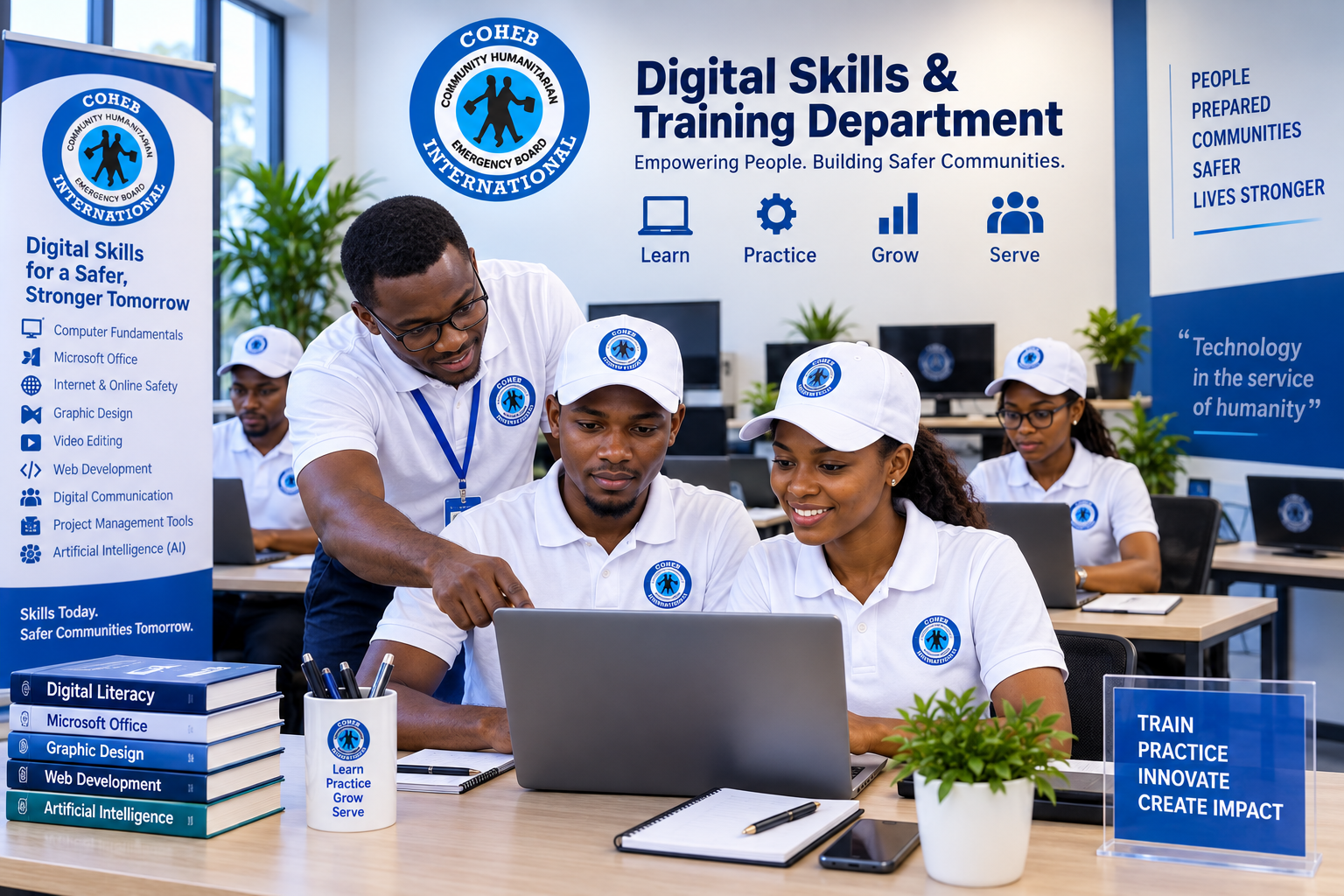
Digital Skills & Training Department
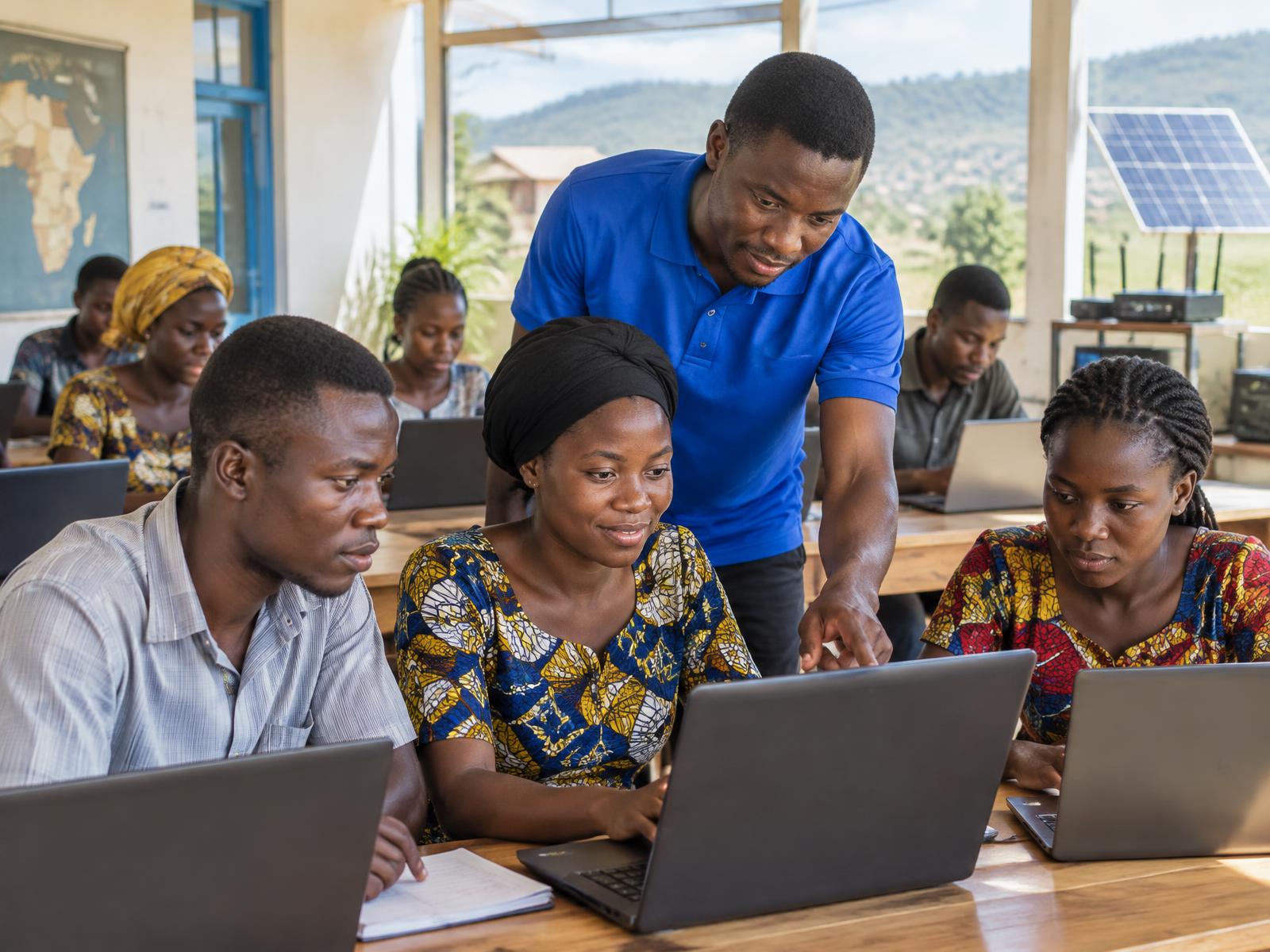
Provides practical computer literacy, office-productivity, coding, online safety and digital entrepreneurship training. Programs prioritize young people, women, displaced people and other underserved groups so they can participate confidently in education, employment and the digital economy.
Key achievements
- Community computer-training sessions introducing first-time learners to essential digital skills
- Office-productivity and coding courses preparing young people for employment and further education
- Online-safety awareness helping women and youth navigate the internet securely and confidently
- Digital-entrepreneurship coaching supporting beneficiaries to build income-generating activities online
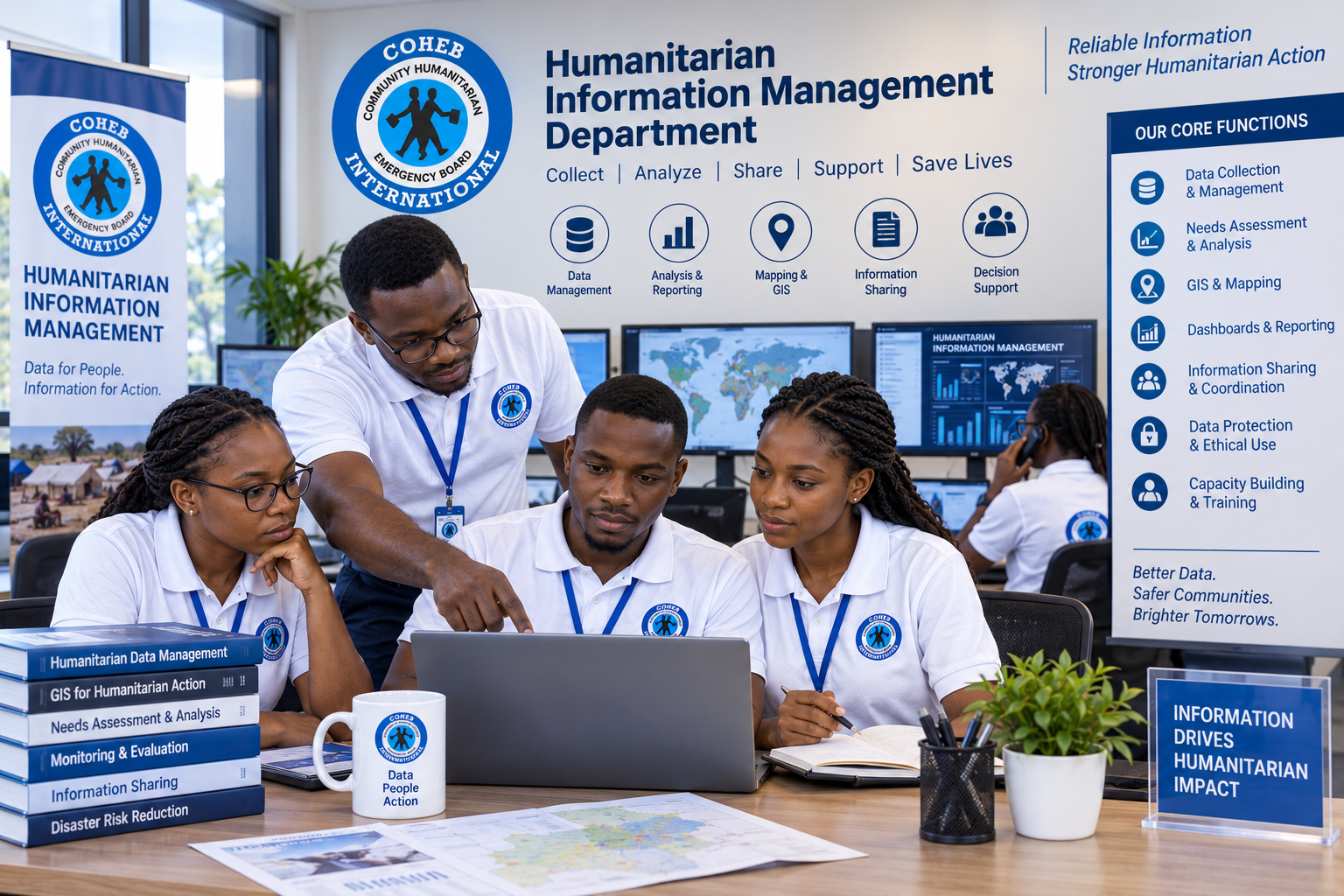
Humanitarian Information Management Department
Supports responsible data collection, analysis, mapping and reporting for humanitarian programs. The department helps field teams make timely, evidence-based decisions while protecting the privacy, dignity and security of affected people.
Key achievements
- Digital data-collection tools deployed with field teams for faster, more accurate needs assessments
- Program dashboards and maps helping coordinators target assistance where needs are greatest
- Responsible data-management practices safeguarding the privacy and dignity of affected people
- Timely reporting that strengthens accountability to communities, partners and donors
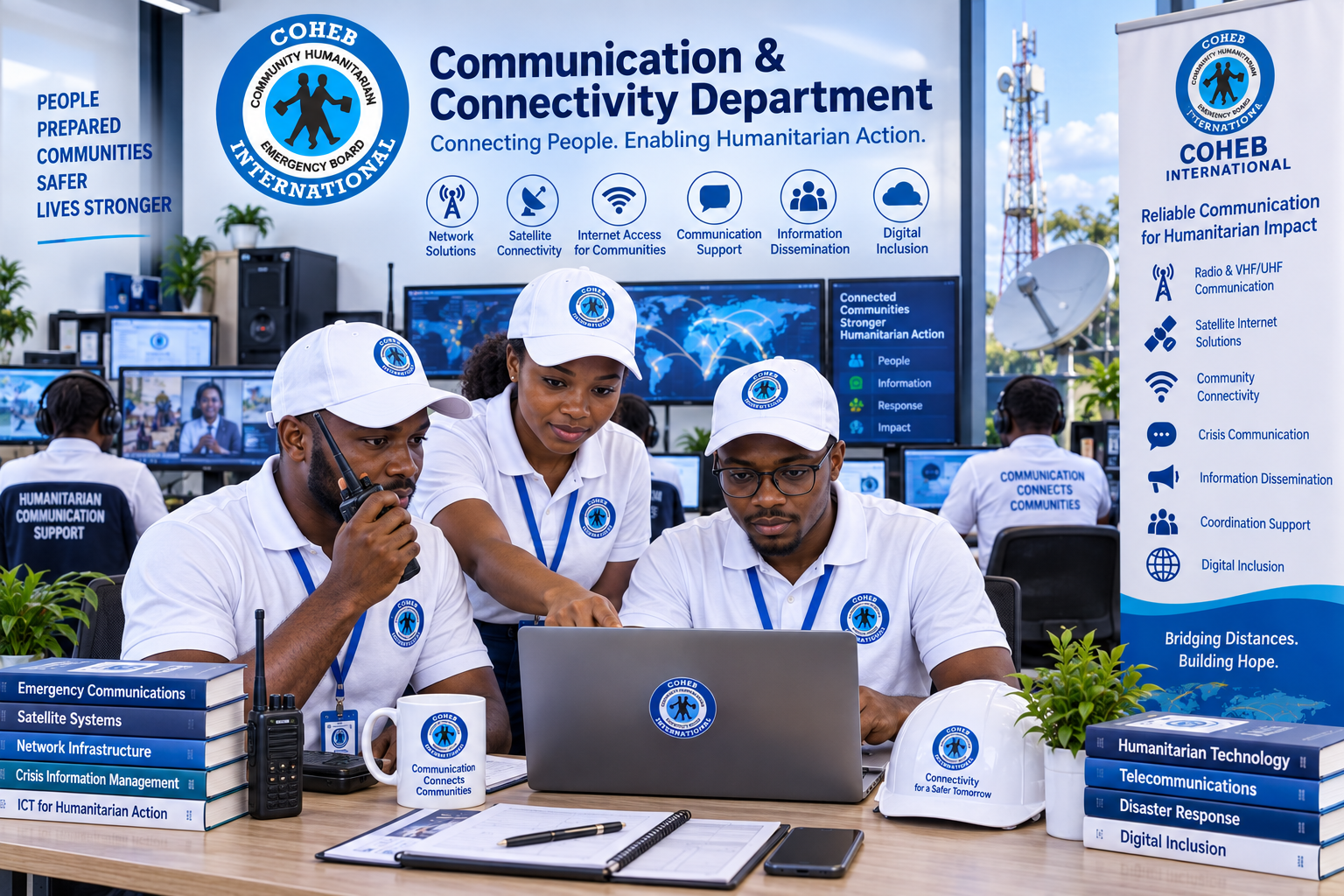
Communication & Connectivity Department
Improves access to reliable communication tools, community information channels and internet connectivity in hard-to-reach areas. It also supports emergency communication, community feedback and accurate public-information campaigns during crises.
Key achievements
- Community information channels keeping remote populations informed with timely, accurate updates
- Emergency communication support connecting crisis-affected communities with responders and services
- Connectivity initiatives bringing internet access to underserved schools and community spaces
- Two-way feedback systems giving communities a direct voice in the programs that serve them
Why this matters
Access to technology is increasingly essential for education, employment, health information, financial services and participation in public life. Yet many crisis-affected and rural communities remain excluded by limited connectivity, scarce equipment and a lack of practical digital skills.
Digital inclusion helps young people and women build livelihoods, enables displaced learners to continue their education, and gives communities faster access to reliable information and essential services.
In emergencies, secure communication and accurate information can save lives. Strong ICT systems help humanitarian teams identify needs, coordinate assistance, monitor results and listen to the communities they serve.
From the field
Stand with communities on the frontlines.
Your support powers the mobile clinics, safe spaces, schools, and farms our teams deliver every day.